This is the package I did not realize I 100% needed in my life. Today’s figures are now going to feature Macaroni and Cheese and Razzmatazz
1 Like
Ok I’ve been staring at that cursed crayon chart for days now and this just keeps making me more and more angry.
edit:
Ooooh this is what I was missing:
Suspension Losses: Vibrations cause friction in bike and rider. This friction turns energy into heat and slow the bike down. Higher pressure means more vibration, hence higher suspension losses (red graph).
The red line is total nonsense!
Now I’m wondering how much you’d have to vibrate a bike and rider to generate a measurable amount of heat lol
And also, the heat slows the bike down? Like it’s affecting the tolerances in the bearings or something?
Shartmo I always just thought that high pressures made bikes ride like shit and you can’t pedal as good when your fillings are rattling
We’re all just molecules vibrating in space, man
8 Likes
The whole thing is total nonsense, which is why it’s in crayon with no underlying data. He’s combining his interpretations of multiple experiments into an outcome that none of the experiments on an individual level support.
I didn’t realize until today that Mark Vande Kamp is a sociologist, with a minor (?) in statistics. I’ve completely wasted my time engaging with any of this. I’m going to bluepill normie myself and only look at bicycle rolling resistance from now on.
8 Likes
I don’t think there’s a KPI for tiredness that you can relate to anything in a simple fashion.
Physiology / Kinesiology people can correct me here, but I’d thought that fatigue was a complex emergent phenomenon in which subjective experience was inextricably in the mix.
In other words, some people may be more bothered by others than a slightly bumpy ride.
quant sociology PhD would qualify someone to make bar charts
2 Likes
The hysteresis line is an approximation of reality atmo. More pressure, less resistance, less rubber flexing.
In concept only, not as presented. It’s bending the wrong way, and should approximate this - especially for supple tires. Hysteresis losses marginal decrease is most significant at lower pressures and drops to 0 at higher pressure, the point at which would be specific to a specific tire.
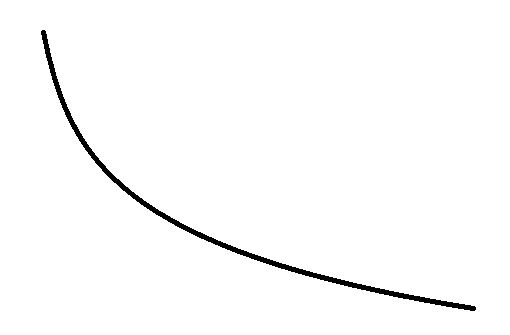
1 Like
It would not qualify one for statistical peer review, which is his position at BQ
1 Like
Right, I did mean approximation. He drew it in crayon after all!
11 Likes
Woah
1 Like
I just went and dug up Jan’s glaciology papers from back in the day. Of course he was a Younger Dryas guy - real glacier heads will feel me.
4 Likes
I have no idea what this is and I’ll keep it that way.
1 Like
A period of glacial retrogrouchery calling back to the Pleistocene and reversing warming trends?
4 Likes
I know probably 10 Younger Dryas people, and every single one is a gigantic turbo crank in some capacity, but some of them are good scientists. The meteor → carolina bays dudes are really special.
yes the only real studies I know about this were from the US Army
Driving humvees at speed on a horrendously bumpy circuit track for continuous laps to torture the service members in the seats. The easiest proxy metric was to weigh the unclothed humans before and after, to see how much water they sweated out.
3 Likes
a friend of mine wrote a dissertation on the Harvard Fatigue Lab’s work in the early 20th century. Turns out qualifying relationship of human body and perceived experience is hard enough that you can write a book about it.
Also lol at the military getting to do stuff that social scientists and psychologists would get denied for by their IRB panels.
“hey let’s see if soldiers are tougher than an angry mountain lion. Hop that fence, private!”
5 Likes
this is actually a little crazy
hope they keep a presence in eugene