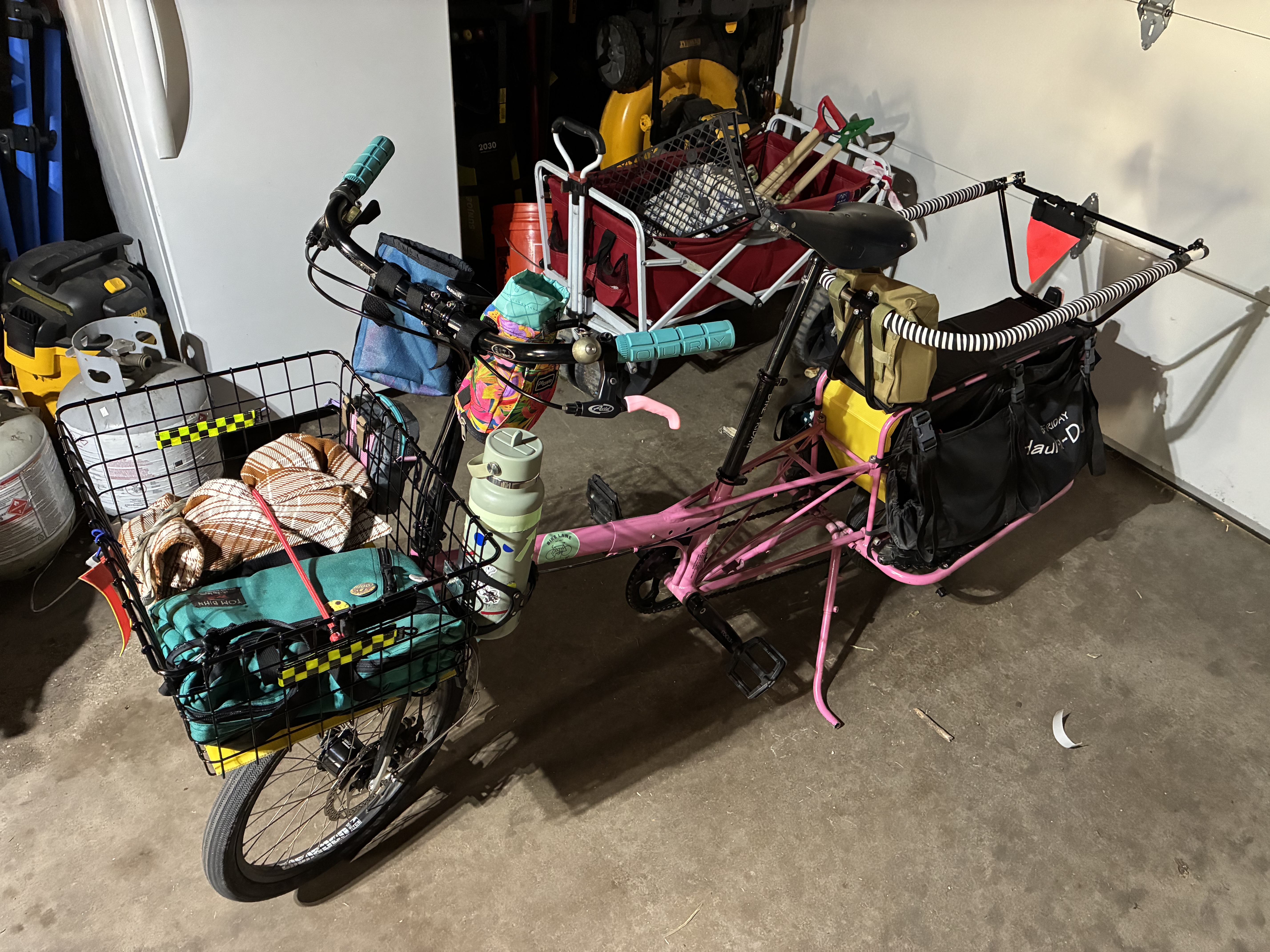
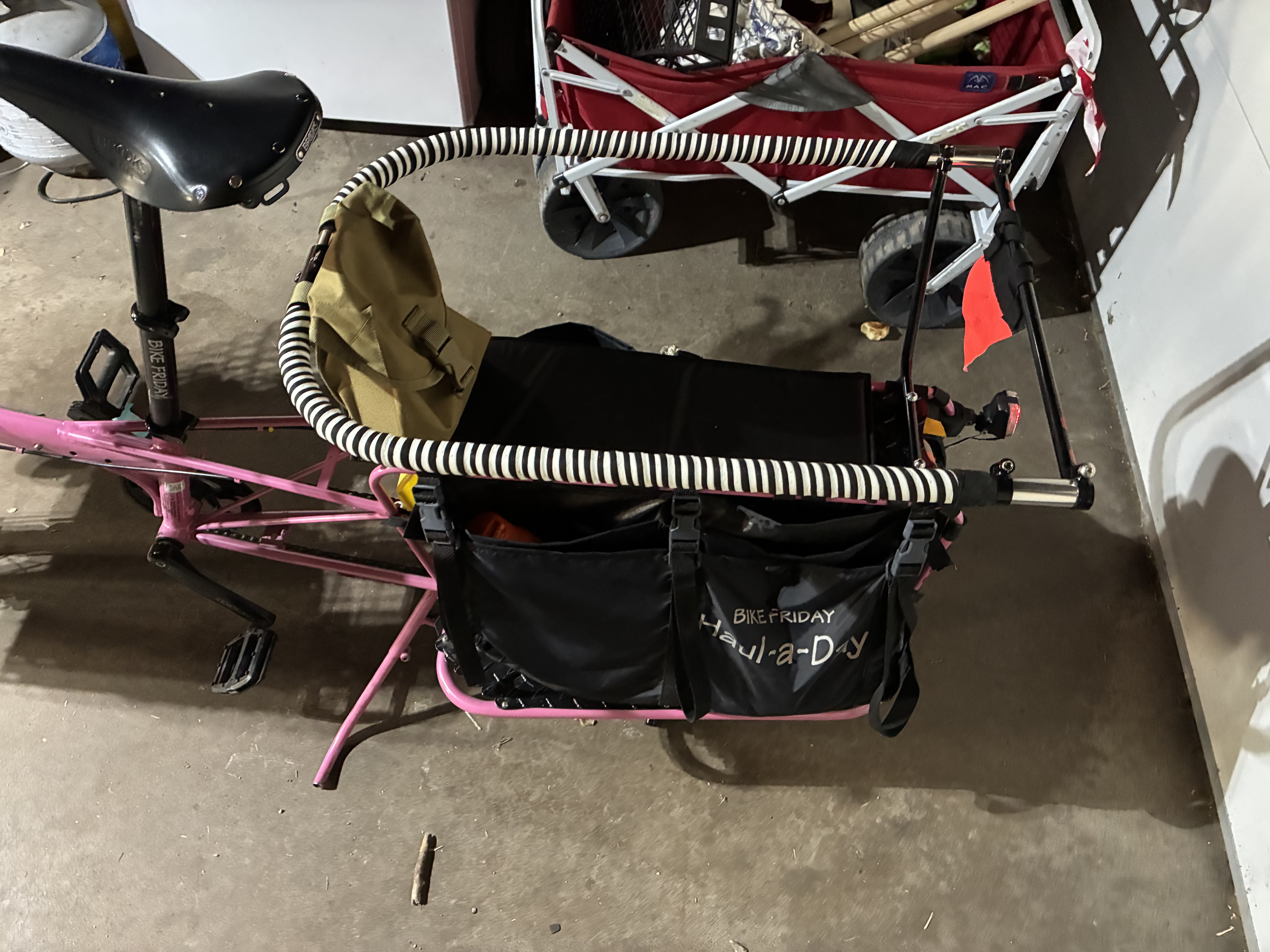
I made this bike look even more ridiculous by wrapping the hoop with the Beetlejuice ass tape.
16 Likes

7 Likes
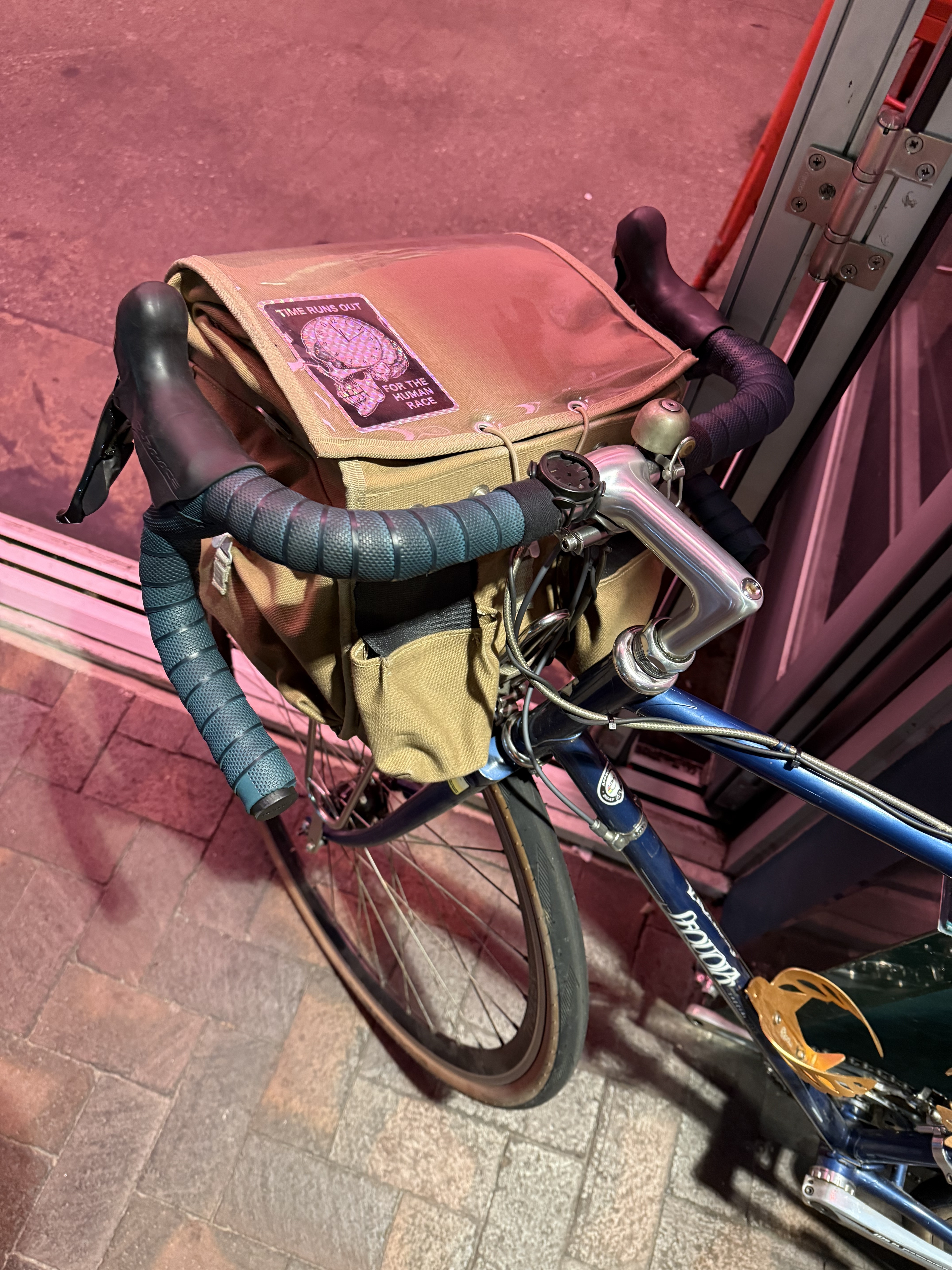
Is that an SB-15 speedlight? I had one of those on my FE2!
1 Like
Super loud squealing after my brake rebuild and bleed yesterday. Got the pads out today and hit them with a file, also cleaned the rotors with brake cleaner. Now everything’s silent
I give it 9.5 out of 10 Sheldons!
Hard to know how to hit 10 without triggering the ‘well now you’re trying TOO hard’ reflex.
2 Likes
10 is a half-recumbent tandem.
1 Like
Send yr address I’ll send you an Oregon sticker pack
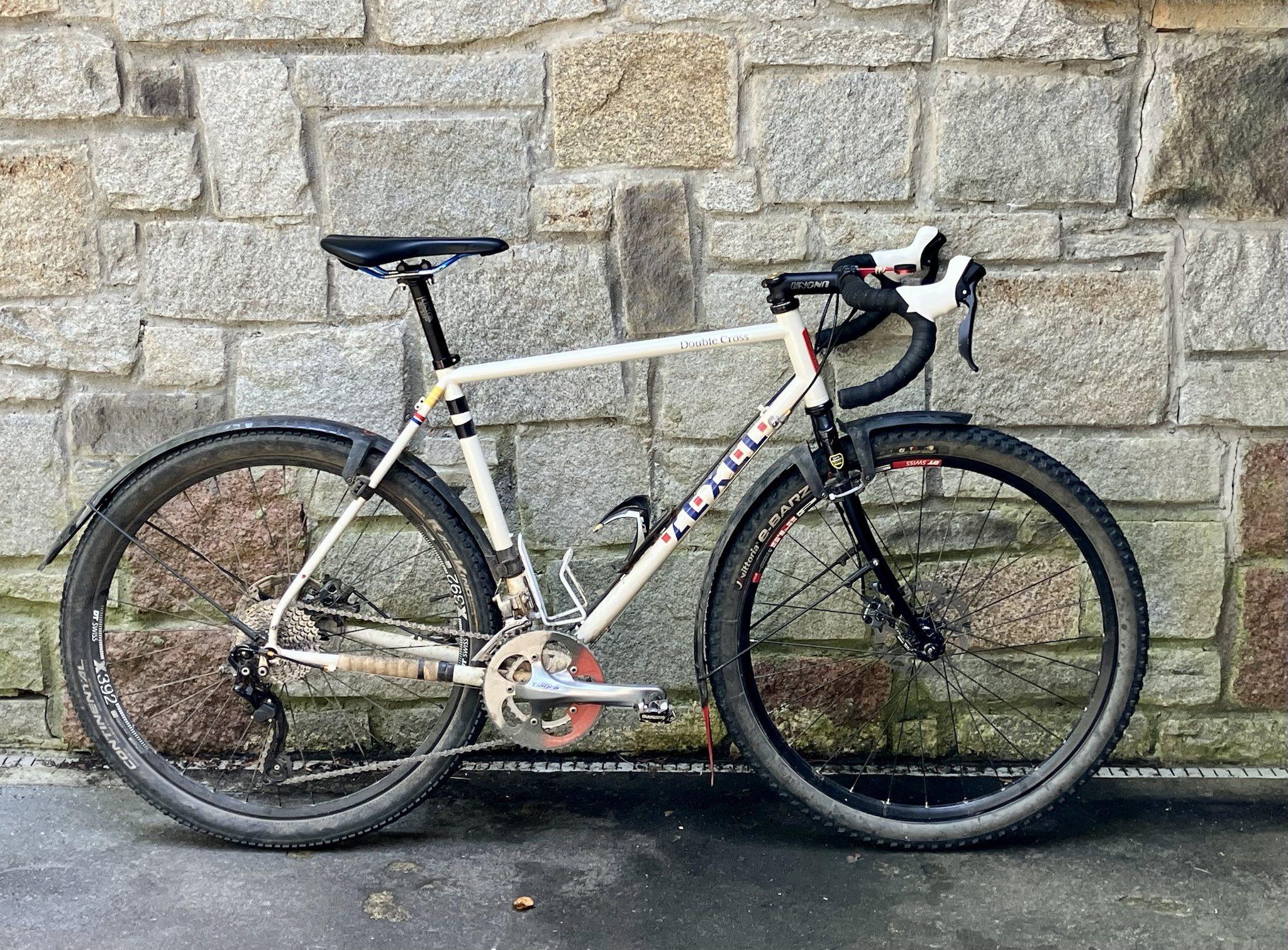
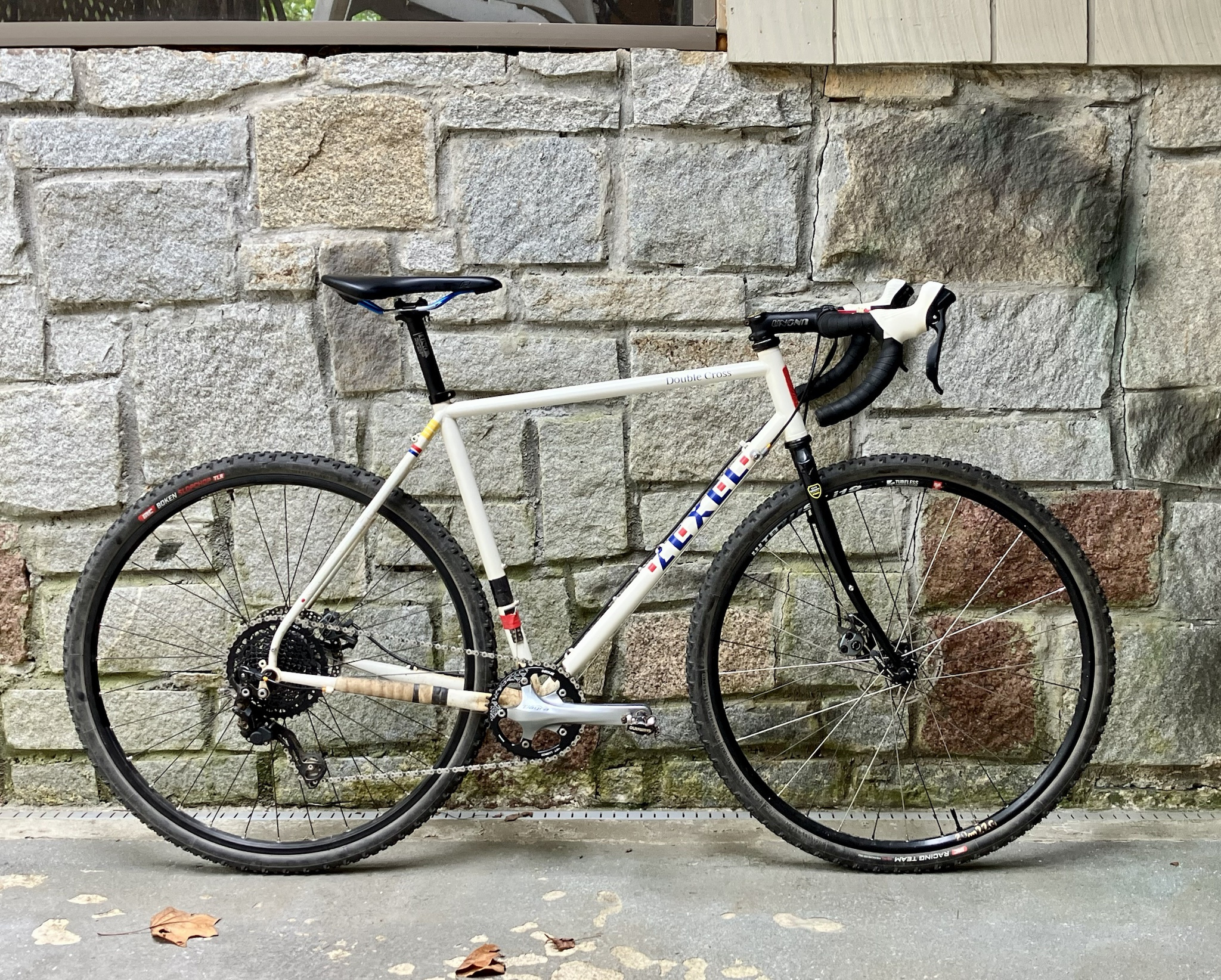
reject modernity; embrace cyclocross
8 Likes
Cross bike looks better atmo
3 Likes
hi Tarck long time no see
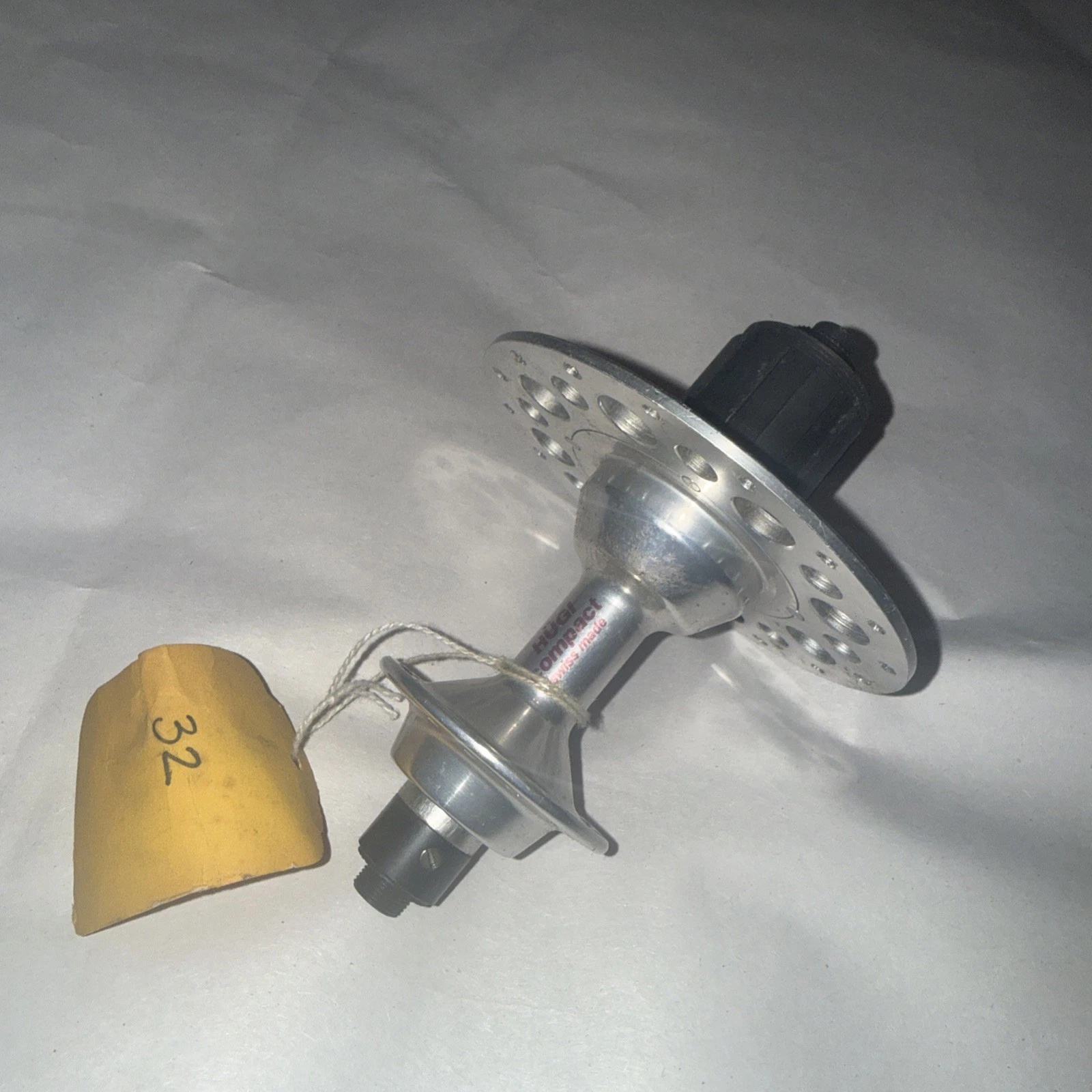
A few months ago I was searching for a cool rear hub to stick on my was-supposed-to-be-a-partsbin-build Gunnar Crosshairs and came across this thing on ebay. How could I turn it down? Sure it has the unique-to-8-speed-Dura-Ace variant of the Uniglide freehub body on it, and I’m trying to build this up as a 1x11, but I know there were versions of the Hugi Compact with Hyperglide freehub bodies and all of the Hugi / DT star ratchet stuff is super cross compatible, so this should be an easy conversion, right?
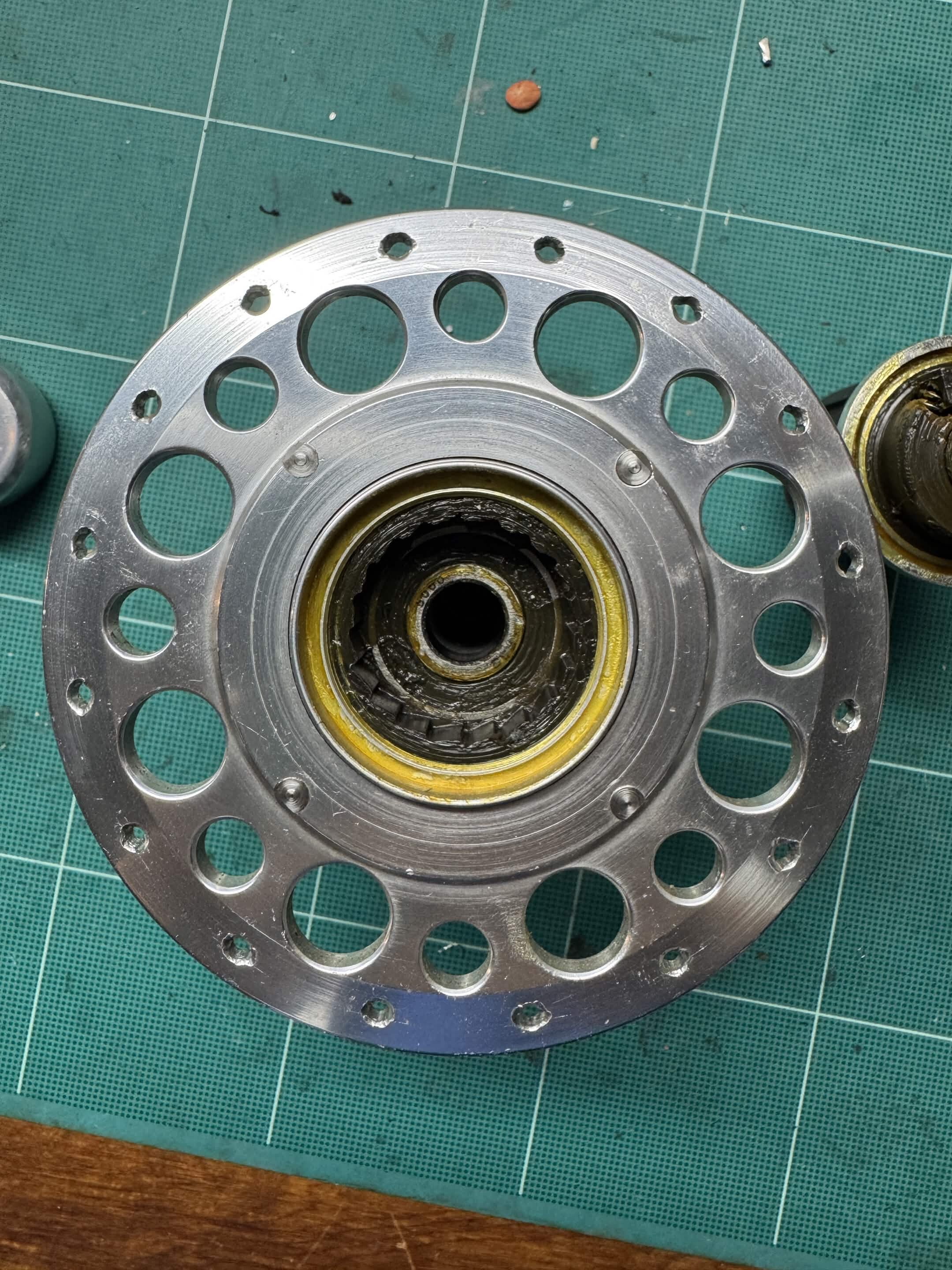
Wrong. This is not a the typical Hugi star ratchet, it’s a 2-pawl setup???
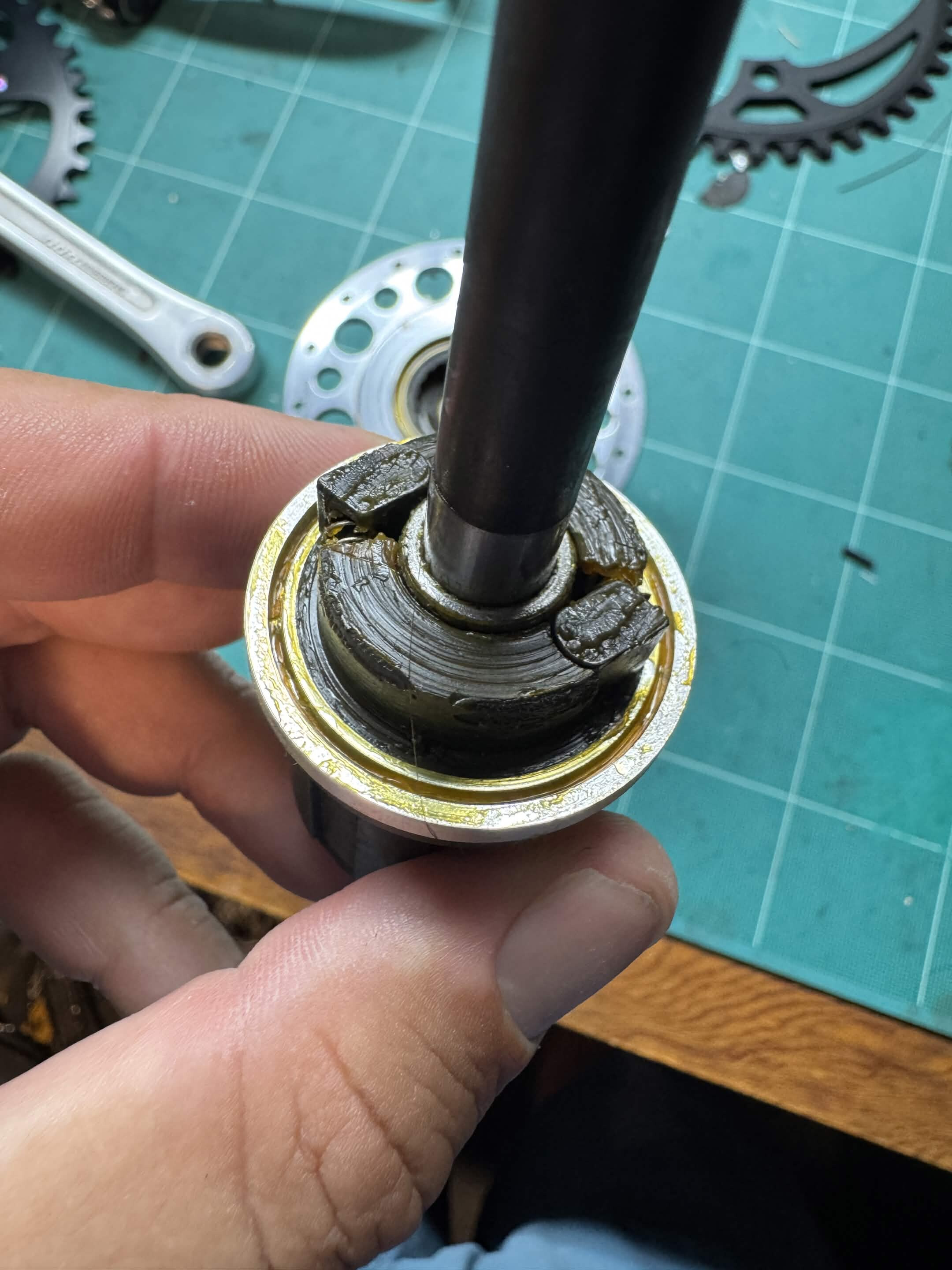
Well OK, the drive ring looks threaded in just like on modern DT hubs. Maybe I can swap it out for a star ratchet ring nut? Problem 1: this ratchet ring has a smaller ID than DT’s modern 3-pawl hubs, so DT’s tool doesn’t fit. OK, I’ll make my own tool. The original plan was just to use the 3D print as a test fit, then get Send-Cut-Send to laser cut a tool for me. But hell, I have the print now, let’s just put some torque on the plastic and see… And the ring came right out!
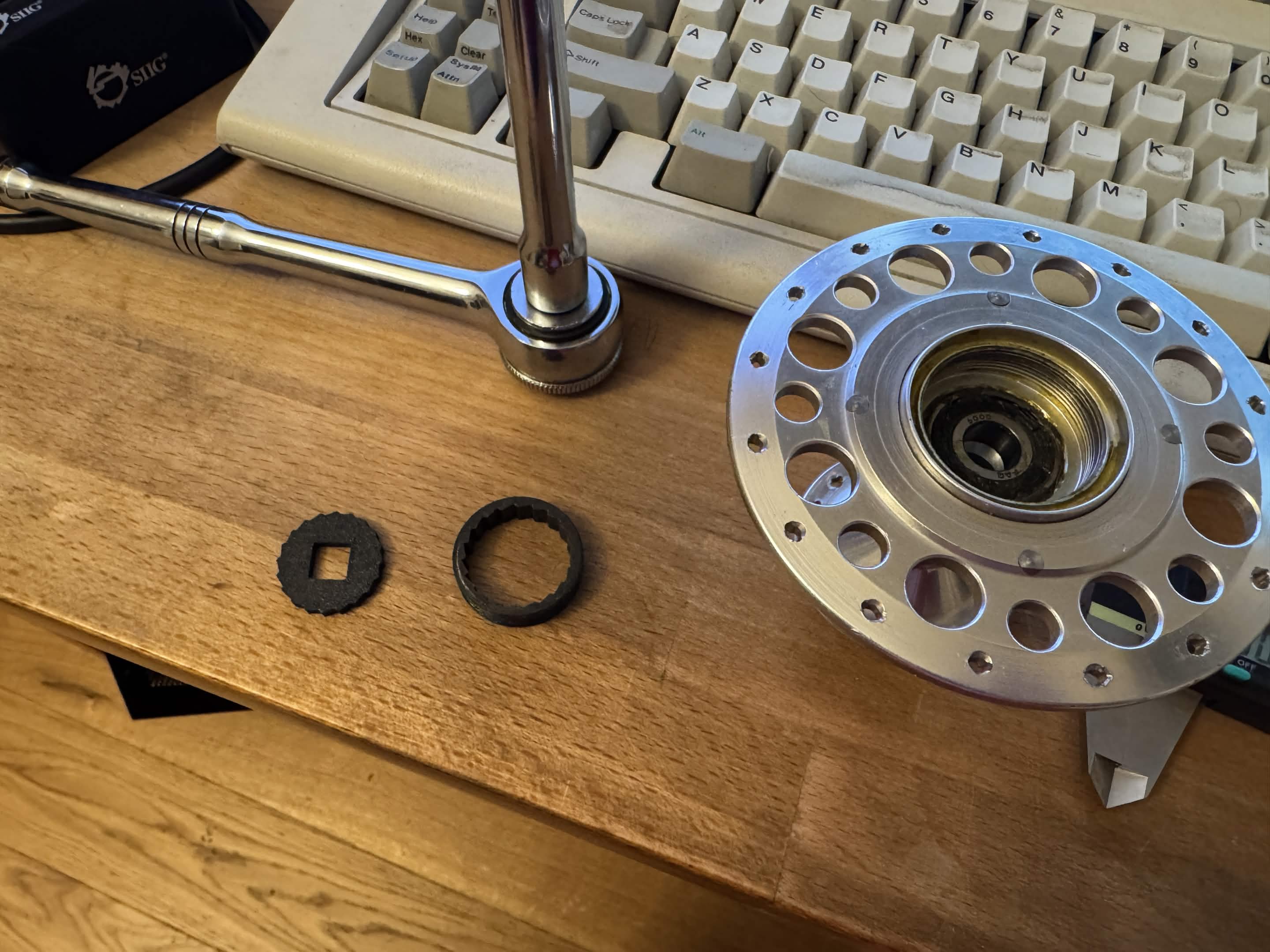

Problem 2: it turns out this ring nut is M32x1 threaded. Every star ratchet ring nut going back through at least 2000 or so has had M34x1 threads (the manual for the DT '95/'98 doesn’t call out the ring nut as a separate part so who knows there… but based on some info I found out later, I heavily suspect all star ratchet hubs - even the pre-DT “Made in Germany” Hugi Compacts - had M34 ring nuts)
At this point me and a bud over on the bicycle counterculture slack kind of went down a rabbit hole. Documentation available online for the early Hugi hubs is essentially non-existent, but we sorta think this might be from the first generation of Hugi hubs? Every single other Hugi hub we could find pictures of is like the later DT ones, with press-on axle endcaps (example). But this hub has an axle that protrudes all the way into the dropouts, with thread on “locknuts” (each locked with a setscrew)… feels like a more primitive/earlier design.
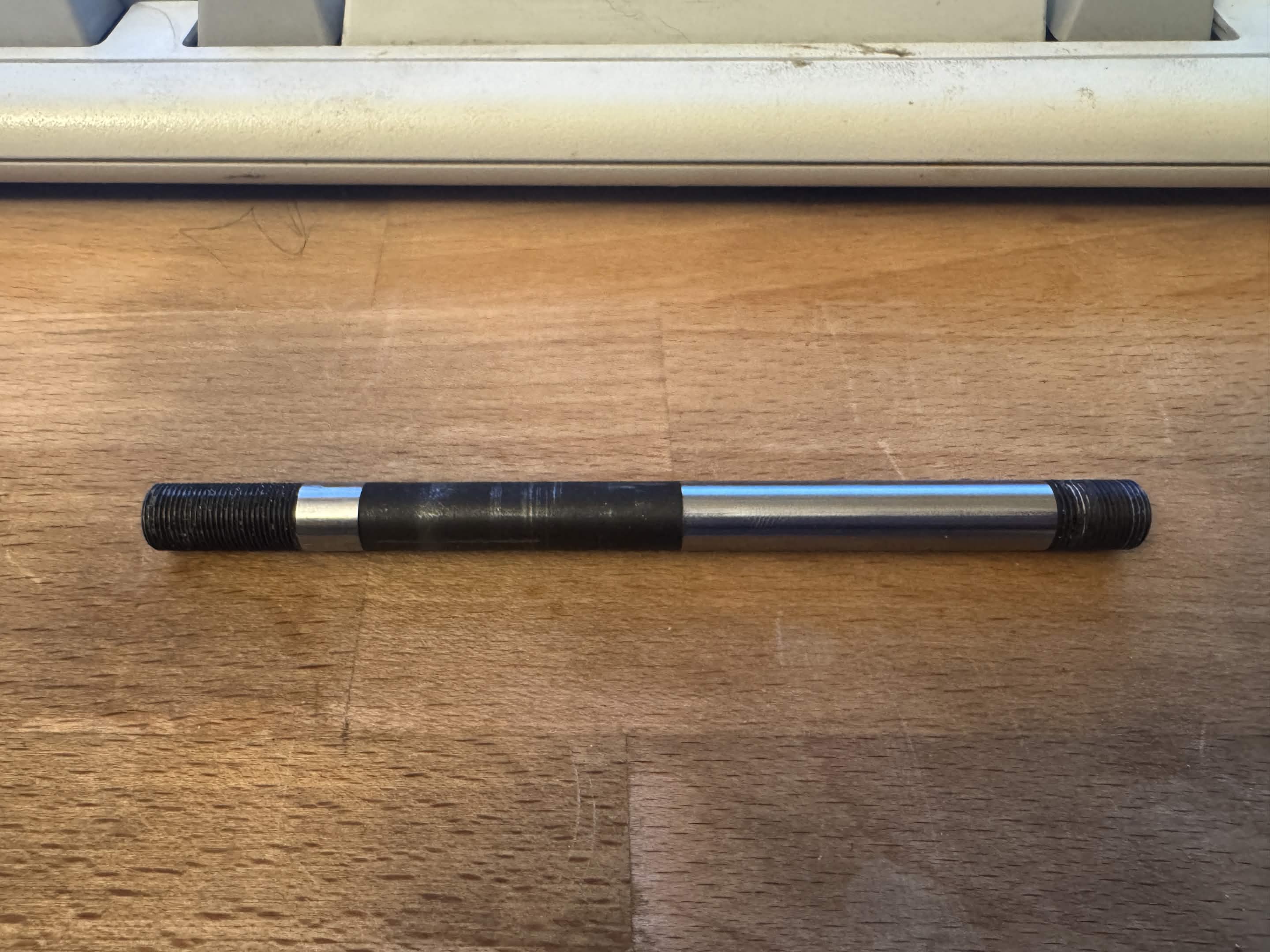
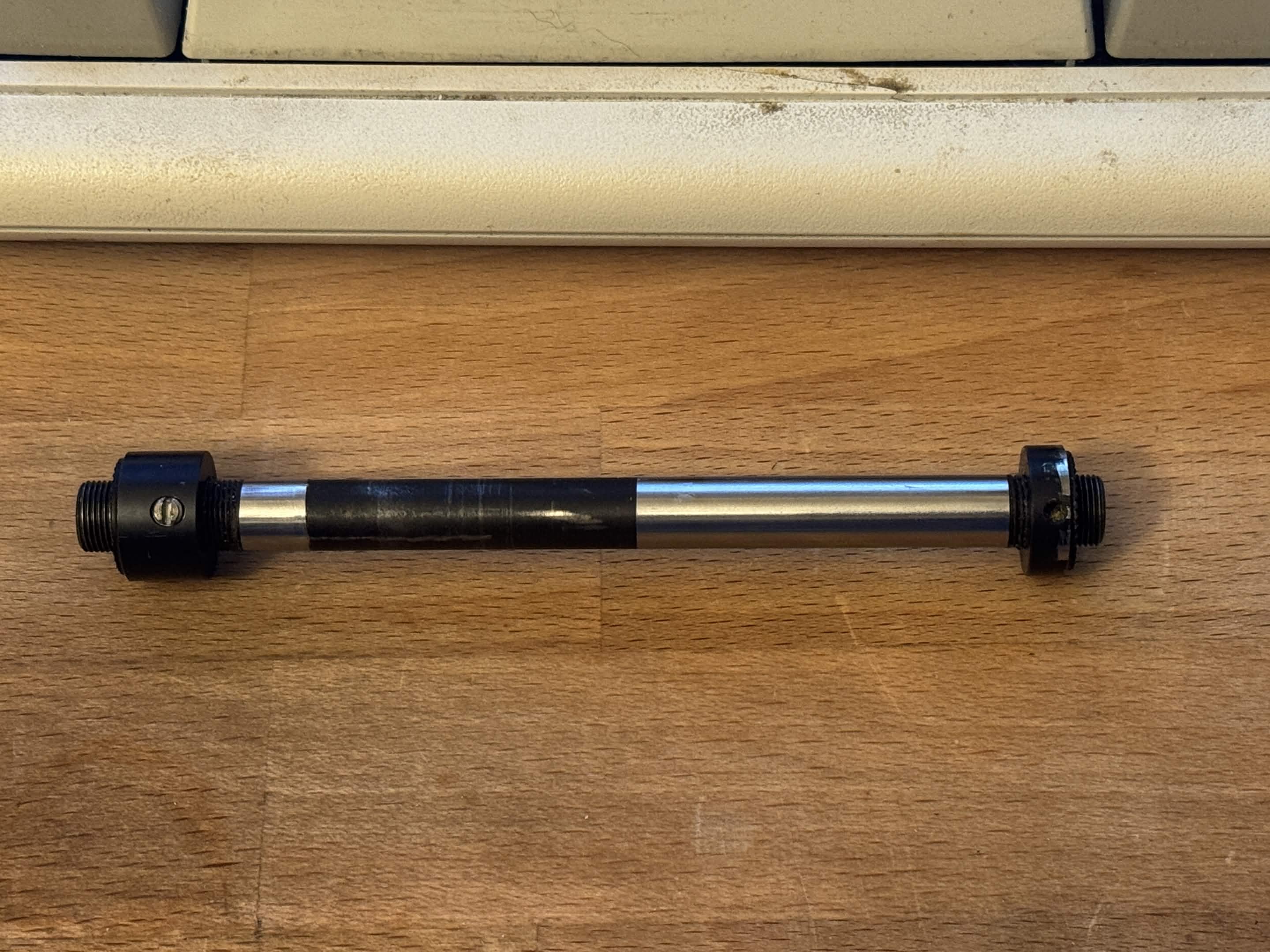
We also ran across a guy with the exact same hub, so this wasn’t a one-off… and then also another person with this exact hub who converted it to hyperglide! Like I’d kind of resigned myself to at this point, it involved a lathe.
So: Lathe time lathe time lathe time. Unlike the link above, I figured it would be easier to modify new parts to fit the existing hubshell instead of trying to modify the hubshell to fit the new parts.
Step 1: turn down a star ratchet ring nut (specifically HCDXXX00S3743S) and rethread it for M32x1
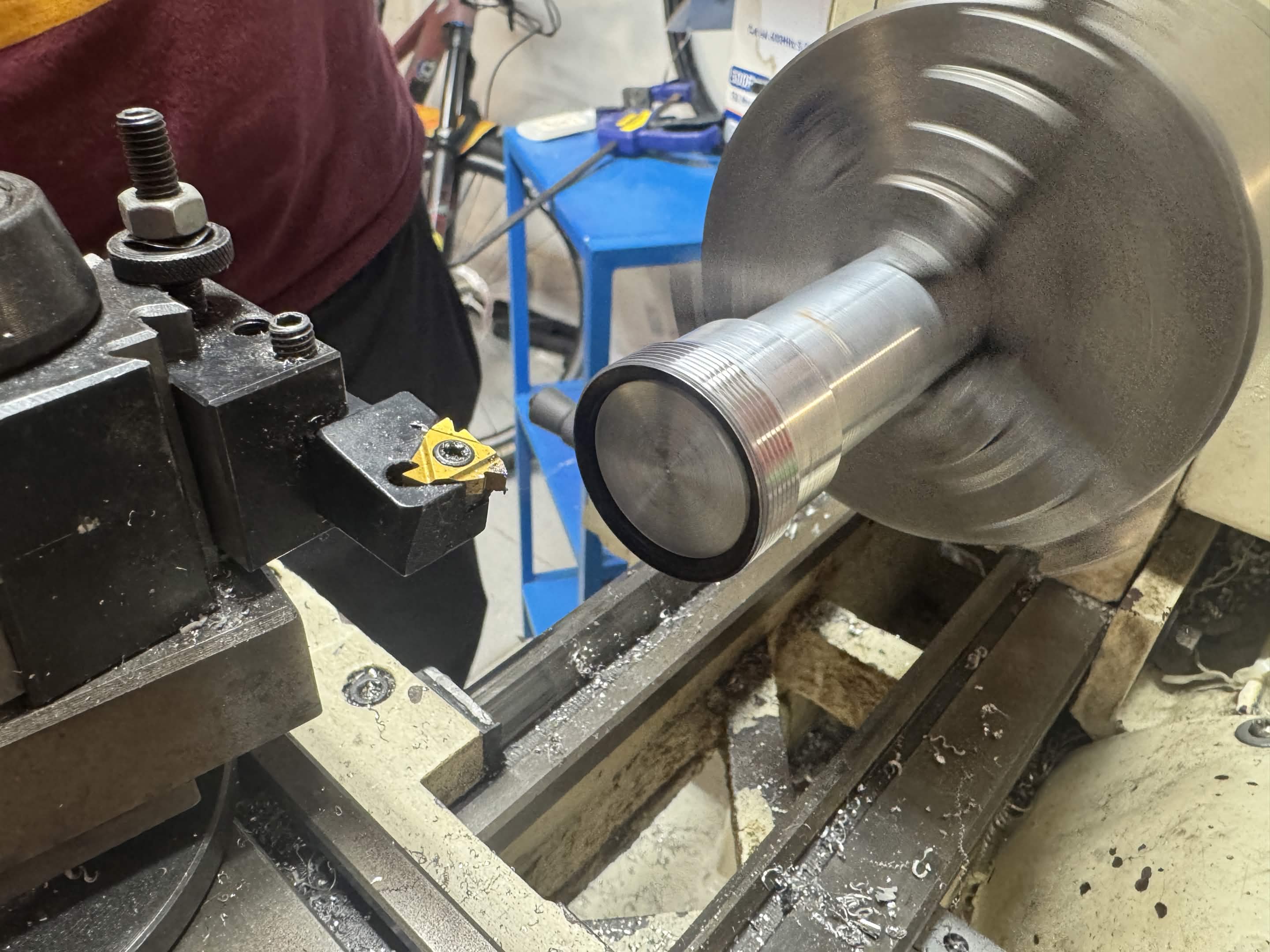
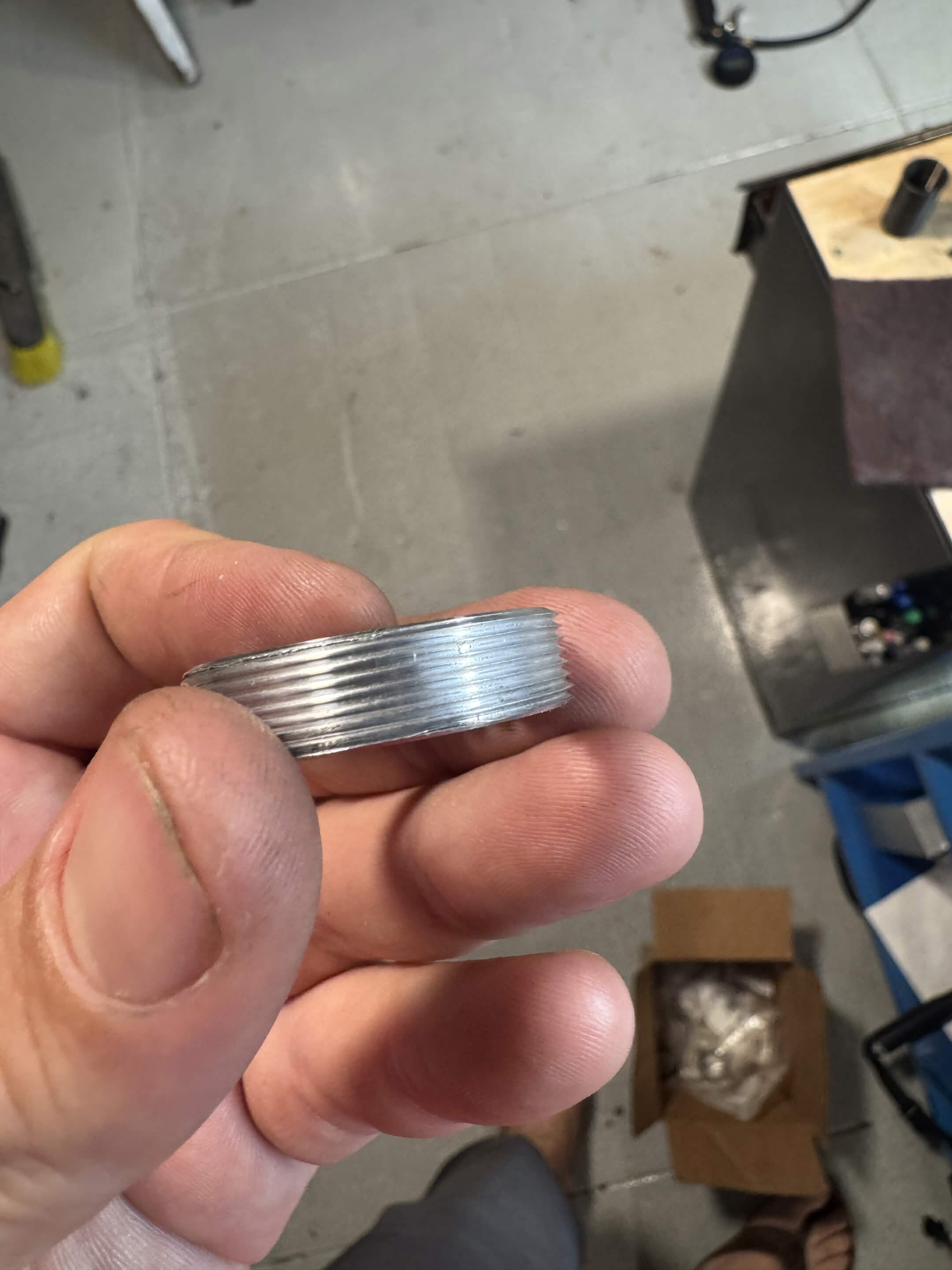
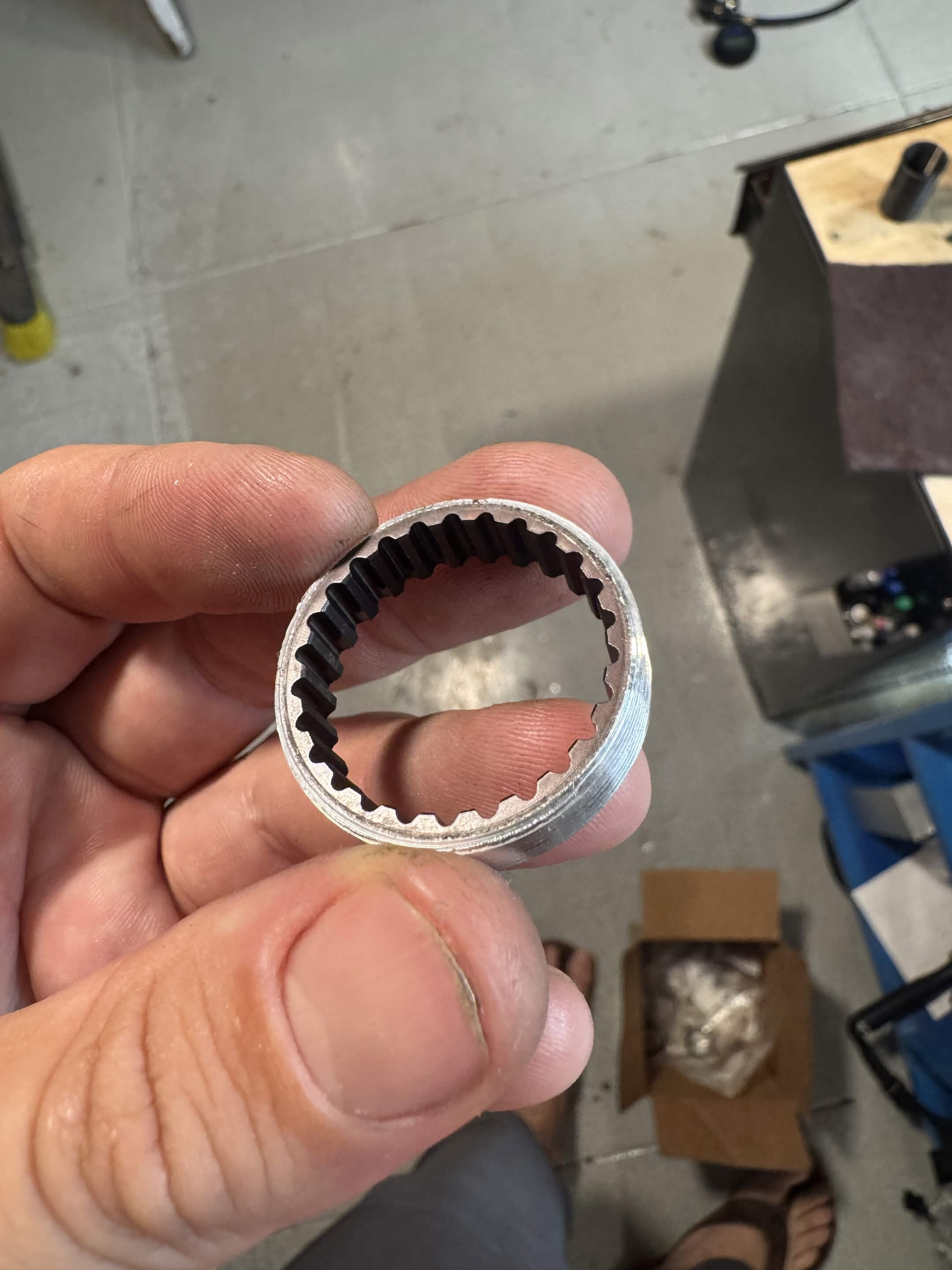
boom done
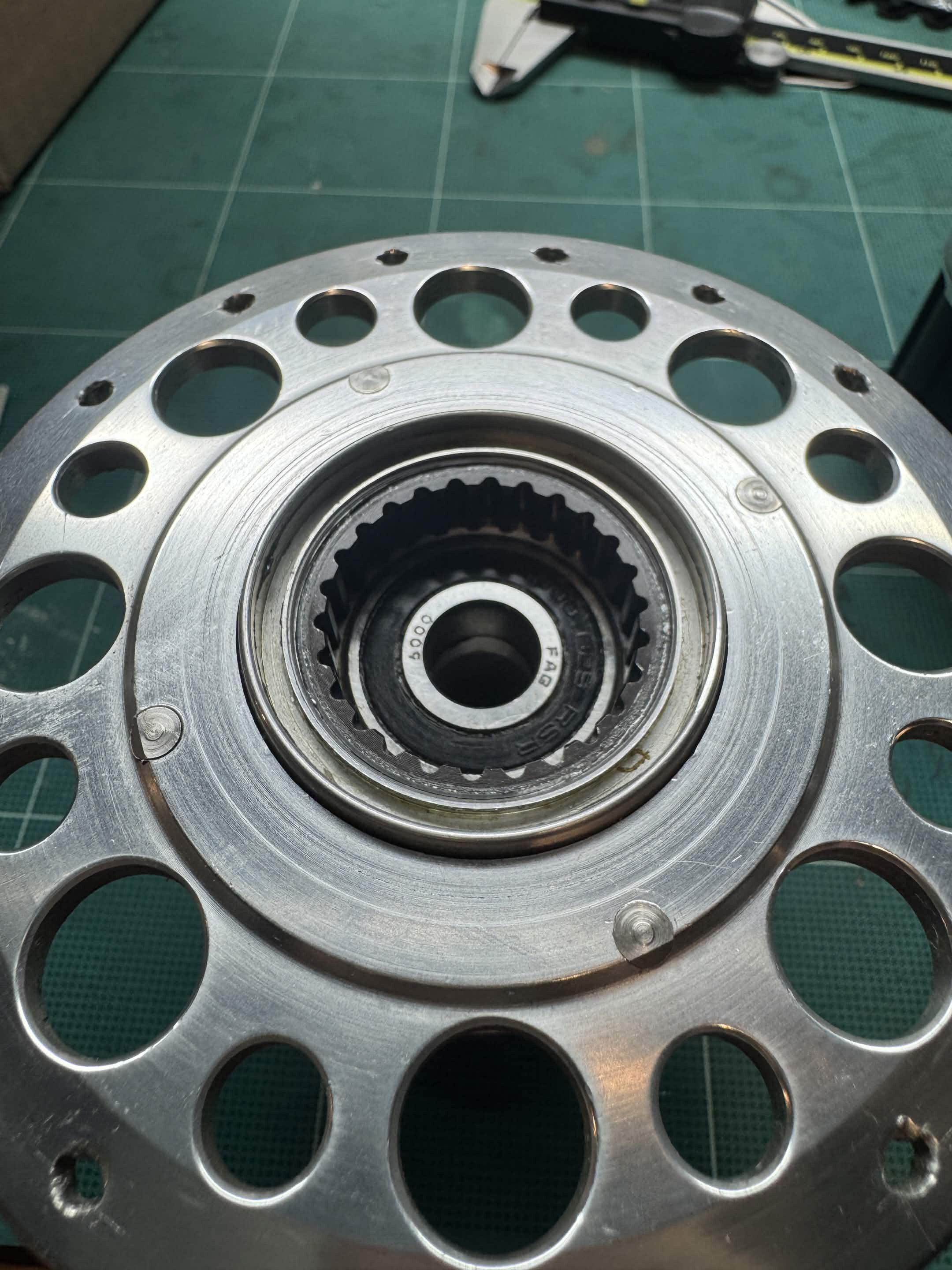
Step 2: pop the grease seal off the back of the old freehub body, and modify this DT 340 freehub body (specifically HWRABX00S1618S) to accept it
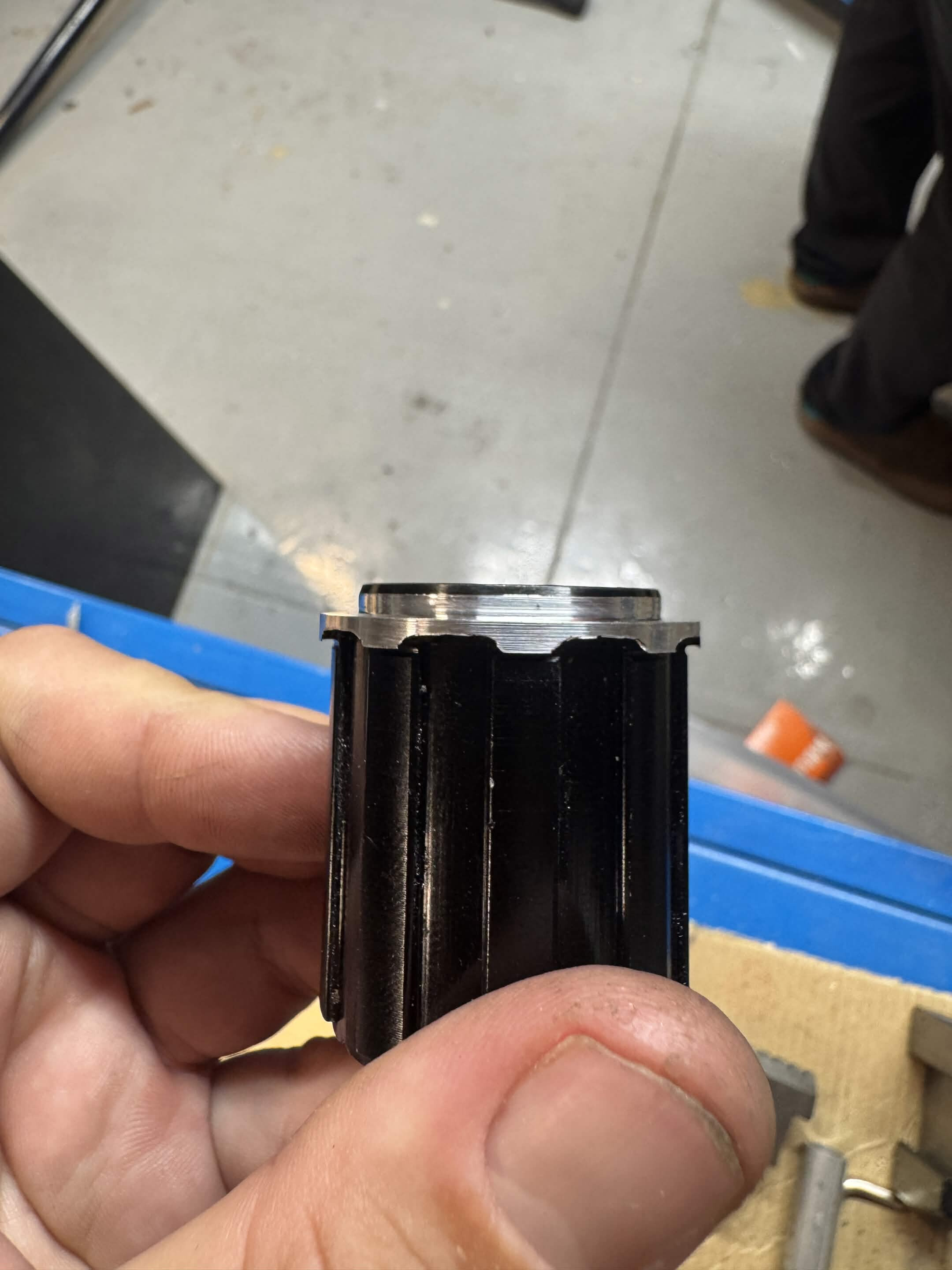
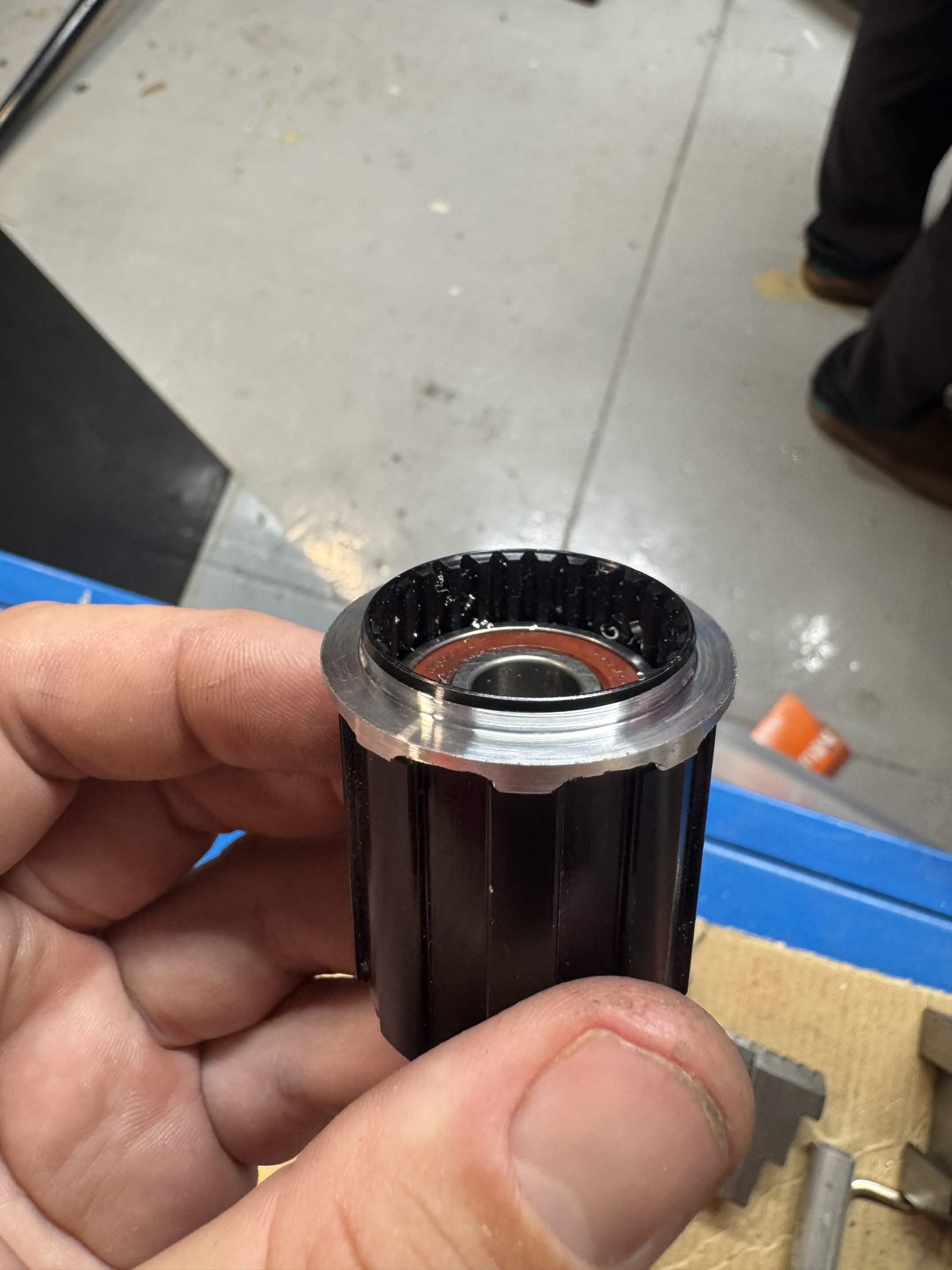
Also done
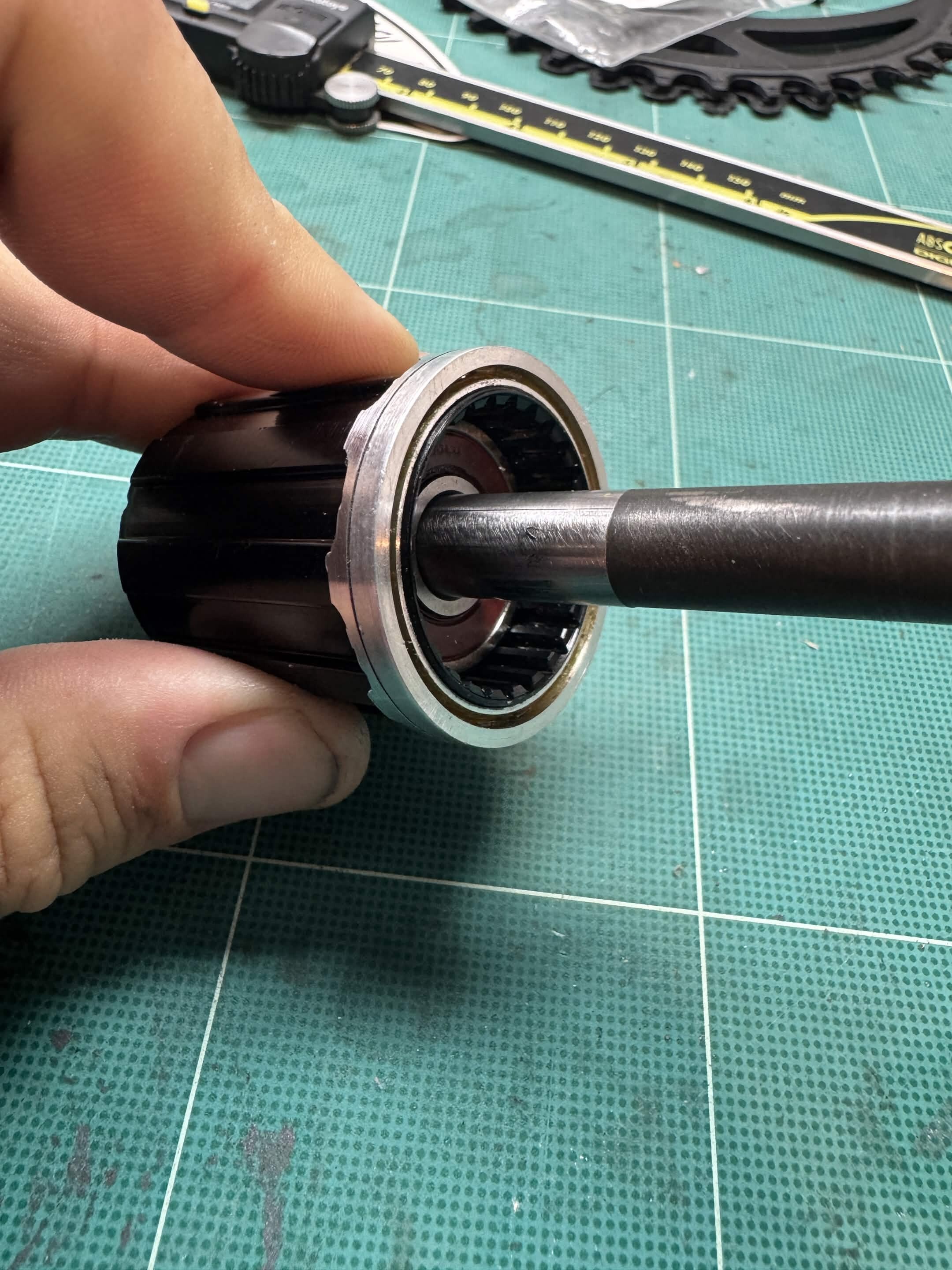
Not pictured: cut a bit of 1/2" OD x 0.049" wall aluminum tube down to 14.9mm, to serve as the spacer between the inboard freehub body bearing and driveside hub bearing. Modern DT hubs use a 15.4mm spacer, but they also have a 0.5mm thick shim between the inboard ratchet spring and driveside hub bearing to keep the spring from digging into the seal. But this hub uses smaller bearings for the smaller 10mm axle, just like the QR-axle DT 340 hubs did, and therefor does not need the shim to keep the spring off the bearing, and takes a correspondingly 0.5mm shorter spacer. It’s not much, but it will help reduce dish on the wheel by just a smidge…
Also not pictured: cut a spacer out of some 16mm OD/10mm ID aluminum spacer stock to go outboard of the freehub body and get the locknut spaced at the correct distance. IIRC this was 5.7mm long.
Anyway, now I have a fully functional, very silly hub with a hyperglide freehub body and modern 36T star ratchets for a DT 350.
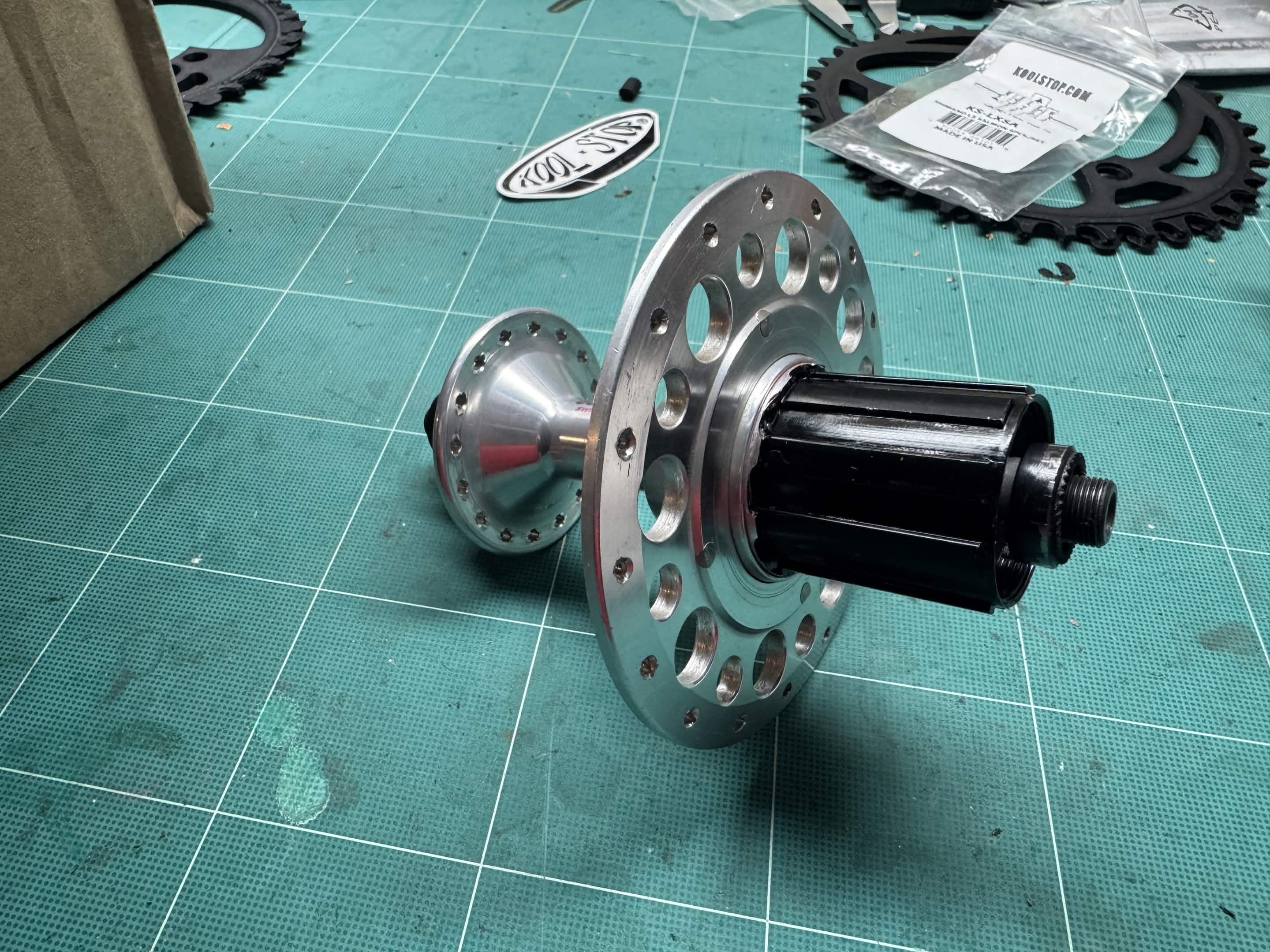
and oh yeah peep those 3D printed chainrings in the back of that picture. I got a custom chainring machined for this 3-bolt Shimano 600 crankset that I’ve had lying around for years
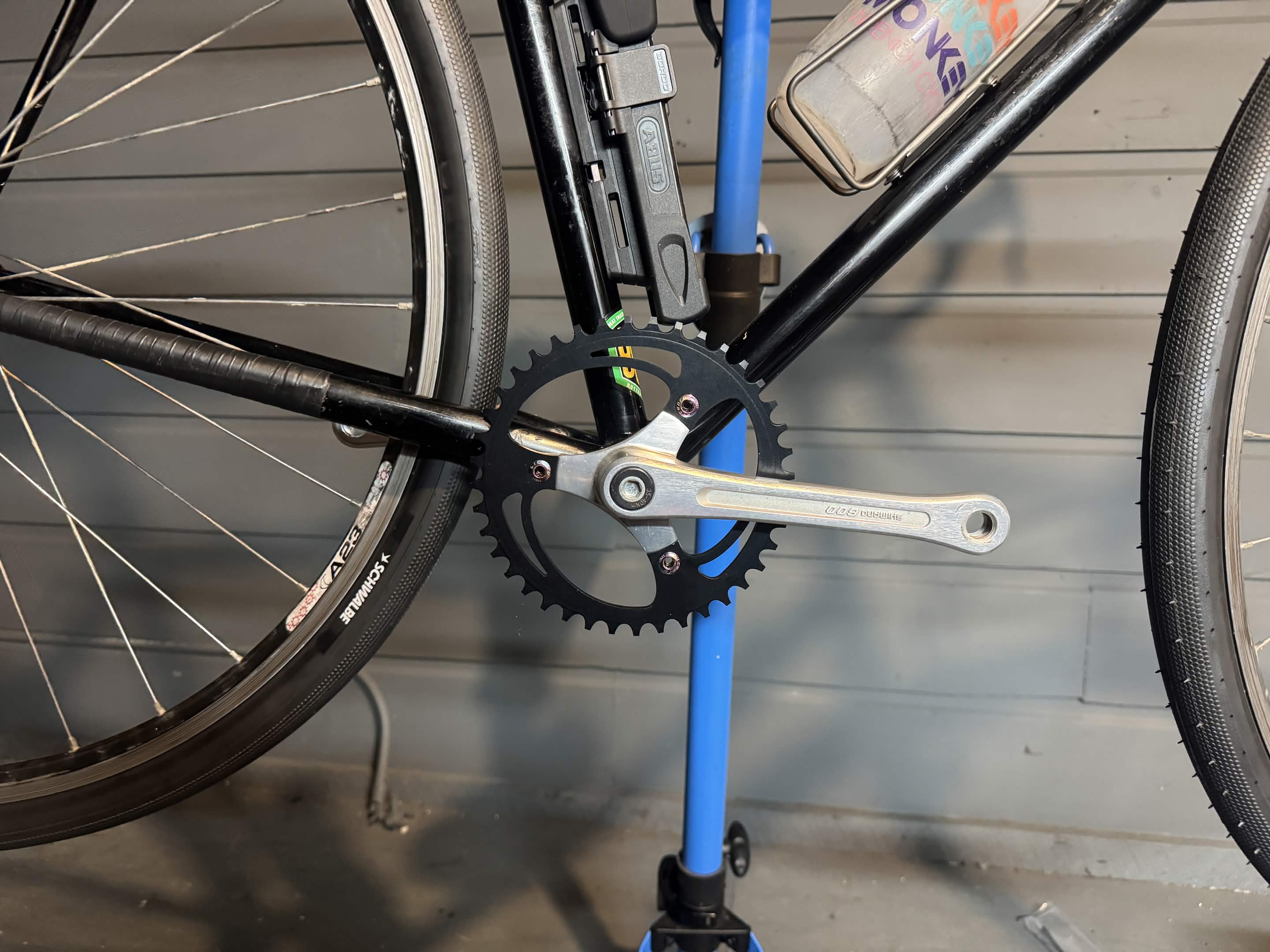
this was supposed to be a parts bin build. What is wrong with me.
40 Likes
Why is it always the simple shit. A creak in my plastic roadie has been giving me the shits. Felt like it was coming from the front. Eliminated the seat/saddle combo. Last week I took the fork off and lubed up the headset. Even sprayed cable stops with lube. Still creaked. Today I removed the crank and BB and replaced it. Still creaked. Lubed the droppouts on the back. Still creaked. Swapped out the front wheel. Fixed. Not sure if it was the super shit liteweight QR or something else. Replaced QR with a Shimano one and put a drop of oil on every spoke nipple interface.
4 Likes
Tarcklebee for some of the most rabbit hole turbo dithering in recent memory
25 Likes
I have a huggi on the back end of gf’s m2. I can keep track of her behind me by ear. Never opened it up.
Epic. I’m proud to virtually know you.
4 Likes
Brilliant.
1 Like
Reported. This shouldn’t be in the “daily dither”, it should have its own thread
4 Likes
Bravo dithering
Did you perhaps make 2 freehub bodies just in case?
There’s a part of me that would have liked a spare, but I had a hard enough time just finding one DT 340 freehub body; DT switched from a 10mm axle to a 15mm axle a long time ago. I suppose if I need to replace it in the future, I could get a newer DT freehub body and make a sleeve to adapt the larger bearings to the smaller axle.
3 Likes