I have two road bikes right now, one with 32mm tubeless tires. It feels good, but a little poky. The other has 25mm tubed tires, and feels fun, but a little rattly, and the tires flat constantly.
My curiousity above was about not trading width for speed. Maybe the Domane is the answer for that, but i"ll never know, as I’m way out of their size range.
Right now I’m pricing rims to tubeless the narrow-tired bike, going up to 28mm.
I rode 23mm tires exclusively for a decade, then switched to 25mm when Velocity came out with the A23. Wider feels better, up to a point. I’m chasing the optimal width and pressure for fast, fun rides that top out at bout two and a half hours.
Data point: I’m 6’6" and usually around 210-215lbs. A 28 for me is like a 25 for a normal sized person.
I’ve used or at least tried most of the more common narrow road clinchers offered since the late 90’s, those Continentals are my favorite, with Michelin’s Pro4SC a close second. The rims they’re on aren’t tubeless compatible, and I’m real real tired of getting flats. most of the routes out of the city are on industrial / freight roads, so lots of bits of metal and scrap and glass everywhere.
I’ve been messing with road tubeless on my longer distance bike for a couple of years, gradually getting wider. For longer rides, the Sectors in 32mm at 53f 58r feel pretty great, but don’t feel as snappy as a smaller tire, because they are not a smaller tire. This is great for what I’m using them for: centuries, 200k and further. Where I live now is pretty flat, so I’m not looking for a tire that can seriously corner under my weight, especially not if I’m chugging along at 16 mph.
I’m interested in whether the new gp5k tl in 28mm will hit the sweet spot for what I’m after for my faster bike. I want to try the 25, but I don’t know that there’s a sealant that’s optimized for stopping a leak really quickly under high pressure. 50-60psi seems like the upper limit of sealant effectiveness, and I’d imagine that i’d be setting 25mm tubeless tires to about 75f 85r or thereabouts.
Fwiw I ran Orange Seal in Schwalbe One 23mm at 95/105psi for a couple years and the only ever failure I had that didn’t seal required a boot, and this was when I was primarily on kinda gnarly MT roads. New Conti GP5K is definitely on the short list of tires to use next.
It seems like it is doing what the early Rotor cranks did -the left and right crank arm are not always 180° from each other. sometimes they are, but sometimes one or another crank is “ahead” of the other. The goal is to make the crank arm move quicker through some arc of the pedal stroke, changing the power delivery.
Rotor cranks used a set of linkages and an eccentric pivot. This uses a set of machined eccentric gears.
As far as I can tell, might be more to it.
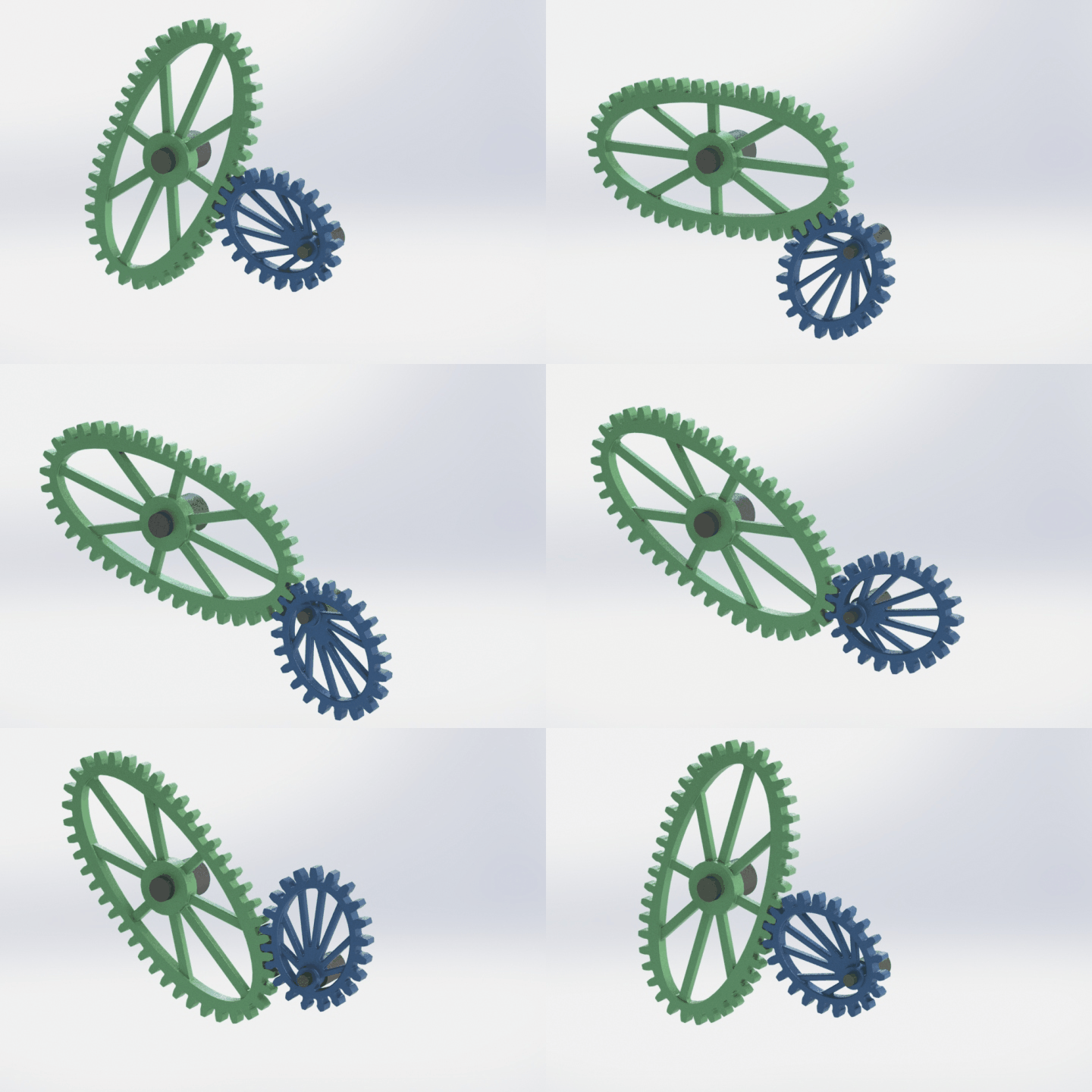
Like this set of gears, where the rotation speed changes depending on which part of the gear is engaged:
yeah, looks like the bottom of the downward powerstroke of each crank pulls the other crack through its TDC deadspot and the top of the powerstroke on that crack pulls the other crank through BDC, rinse and repeat.
this might eliminate both the deadspots, might even provide constant power delivery but given the aerobic output of the rider is fixed i don’t see how it generates 25% moar powah (unless our old friend element “U” is involved)
io’d say it’s not jsut the gears that are eccentric in this case
yes i keno most of those gears aren’t technically eccentric, just plain weird